

A product marketing plan doesn’t have to be complicated. Discover the no-fluff product marketing framework we use here at The Wealthy Creative to turn digital products into passive income streams.
The Complete Guide to Building a Product Marketing Plan That Actually Sells
A product marketing plan is not a 40-slide deck. It’s a repeatable business system. Here’s how to build a profitable product marketing plan in a weekend and run it on autopilot.
At The Wealthy Creative, we’ve watched talented creators burn out trying to “hustle“ their way to product sales. The answer isn’t more effort — it’s having the best product marketing strategies to profitably market a product from day one.
What if you could launch a digital product and have the marketing run itself? This ultimate marketing guide from The Wealthy Creative walks through step-by-step on how to build a product marketing plan designed for automation.
This isn’t a product marketing theory article. It’s a product marketing blueprint. From product positioning to product post-launch email marketing sequences, this complete product marketing plan covers every phase of the product sales cycle.
Key Takeaways (TL;DR): Best Product Marketing Plans
- Key Takeaway 1: A product marketing plan is a documented, repeatable promotion system — NOT a one-time promotion event. Without it, even great products fail.
- Key Takeaway 2: The four pillars of any effective product marketing plan are: Product Positioning, Product Target Audience, Product Marketing Channels, and Product Launch Sequence.
- Key Takeaway 3: Strategies in marketing a product must be tailored to your specific audience — NOT copied from brands with 10x your budget.
- Key Takeaway 4: Automation is the creator’s secret weapon. Your product plan should include evergreen content, automated email sequences, and a self-running sales funnel.
- Key Takeaway 5: Pre-launch product marketing plan is the most underrated phase. Build product demand before your product exists.
- Key Takeaway 6: Post-launch product marketing plan is where real money is made. Your plan must include a long-tail monetization strategy.
- Key Takeaway 7: A one-page product marketing plan is more effective than a 40-slide deck you never look at.
- The Complete Guide to Building a Product Marketing Plan That Actually Sells
- Key Takeaways (TL;DR): Best Product Marketing Plans
- Why Your Product Isn't Selling (And What a Real Plan Fixes)
- What Is a Product Marketing Plan (And What It Isn't)
- Your One-Page Product Marketing Plan Template
- Most Common Mistakes That Kill Product Marketing Plans
- Product Marketing Plan Conclusion: Simplicity Is the Strategy
Why Your Product Isn’t Selling (And What a Real Plan Fixes)
You built something great. You know it. Your beta users know it.
But three weeks after product launch, crickets.
Here’s the hard truth: your product didn’t fail. Your product marketing plan did — or more accurately, the product marketing plan that didn’t exist.
I’ve seen this pattern hundreds of times across the Wealthy Creative community. Talented writers, designers, and coaches pour months into creating an exceptional digital product. Then they write a few social posts, send one email, and wonder why PayPal isn’t blowing up.
A real product marketing plan is the difference between a product launch that funds your lifestyle of financial freedom and one that drains your confidence.
This Wealthy Creative guide is your profitable product launch blueprint. We’re going to cover every phase — from product positioning to post-launch product sales automation — so your next product sells even while you’re off the clock.
What Is a Product Marketing Plan (And What It Isn’t)
A product marketing plan is a documented system that defines who your product is for, what problem it solves, how it reaches buyers, and how it converts them — repeatedly, predictably, and ideally, automatically.
It is not:
- A 40-slide PowerPoint presentation
- A one-time launch campaign
- A mood board or brand guide
- Something only big companies need
The Wealthy Creative version of a product marketing plan fits on one page. It is a living business document you update quarterly. It answers six questions:
- Who is this for? (Target Audience)
- What pain does it solve? (Core Problem)
- Why is this different? (Positioning)
- Where do buyers find it? (Communication Channels)
- How do they become buyers? (Marketing Funnel)
- What happens after they buy? (Audience Retention & Customer Upsell)
If you can answer those six questions, you have a marketing plan. Let’s build it.

Phase 1: Product Positioning — The Foundation of Every Successful Strategy in Marketing a Product
Before you write a word of product marketing copy, you need to nail product marketing positioning.
Product positioning is how your product occupies a specific place in your buyer’s mind. It’s not your tagline. It’s not your brand colors. It’s the single, clear reason your product exists for a specific person.
Bad product positioning: “My course helps people be more productive.” Good positioning: “My course helps burned-out freelance designers reclaim 10 hours a week using three automation tools.”
See the difference? One is vague. One is a laser.
How to Write Your Product Positioning Statement
Use the following product positioning statement template:
For [specific audience] who [have this problem],
[Product Name] is a
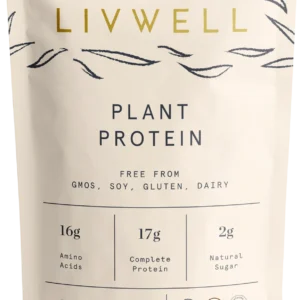
Vanilla Bean Protein Powder: Plant-Based, Vegan, Gluten-Free – LivWell Nutrition
$29.00
Shop LivWell
Unlike [main alternative], our product [key differentiator].
Example of a Product Positioning Statement:
“For solopreneur writers who can’t find time to market their work, The Content Autopilot Kit is a plug-and-play template system that builds your entire marketing funnel in a weekend.
Unlike hiring a marketing manager, our kit costs under $50 and works while you sleep.”
Write this product positioning statement before you do anything else. Every piece of content, every ad, every email you send should be filtered through this lens. If it doesn’t support your positioning, cut it.
Phase 2: Product Marketing Plan Audience Research — Know the Person, Not the Persona
Most marketing advice tells you to build a “buyer persona” — a fictional character with a stock photo and a made-up name like “Marketing Mike.”
We don’t do that here.
Instead, use real language from real people. This is one of the most powerful strategies in marketing a product that almost no creator uses correctly.
The 3-Source Product Marketing Plan Research Method
1. Mine Amazon Reviews Go to Amazon and find books or courses similar to your product. Read the 3-star reviews. These are goldmines — buyers who liked the product but had a specific complaint. That complaint is your opportunity.
2. Raid Reddit and Facebook Groups Find communities where your target audience lives. Search for posts that start with “I’m so frustrated with…” or “Does anyone know how to…” Copy and paste the exact phrases people use. This is your future ad copy.
3. Survey Your Email List (Even If It’s Small) Ask one question: “What’s the #1 thing preventing you from [achieving the goal your product solves]?”
The answers will reshape your entire product marketing plan.
Build a swipe file of the exact words your audience uses to describe their problems. Then mirror those words back in your marketing. This is not manipulation — it’s clarity.
Phase 3: Product Marketing Channel Selection — Where to Spend Your Attention
This is where most creators make a critical mistake: they try to be everywhere.
Pick two channels max for launch. Dominate them. Expand later.
Choosing the Right Product Marketing Channels
Ask yourself:
- Where does my audience already spend time?
- Which channel aligns with my content strengths?
- Which channel can I automate most easily?
| Channel | Best For | Automation Potential |
|---|---|---|
| Email List | Direct sales, trust-building | High (sequences) |
| YouTube | Long-form education, SEO | High (evergreen) |
| Visual products, long tail | High (scheduling tools) | |
| B2B, professional services | Medium | |
| Instagram/TikTok | Brand awareness, top of funnel | Low (unless paid) |
For most digital product creators, the answer is almost always the same: Email + one content channel.
Email converts at 3-5x the rate of social media. If you’re not building your list as part of your product marketing plan, you’re building someone else’s asset.
Phase 4: The Product Launch Marketing Sequence — Turning Attention Into Sales
A product launch is not an announcement. It’s a sequence.
The Wealthy Creative 3-Phase Launch Framework:
Phase A: Product Pre-Launch Marketing Plan (2–4 Weeks Before)
This is the most underused phase in any product marketing plan. Your goal here is to build demand before you ask for money.
Tactics:
- Publish content that solves a related micro-problem your product addresses
- Share “behind the scenes” of the product creation process
- Run a waitlist with an early-bird discount
- Send a survey asking your list what they’d want inside the product
- Drop a free “preview asset” (a sample chapter, a mini-checklist, one video lesson)
The pre-launch phase warms up your audience so your launch email isn’t the first time they’ve heard of this product.
Phase B: Product Launch Marketing Plan (5–7 Days)
Short, urgent, structured. Here’s the exact email sequence:
Day 1: Cart Open — “It’s live. Here’s what’s inside.”
Day 2: Overcome Objection #1 — “Is this for beginners?”
Day 3: Social Proof — “Here’s what early users said.”
Day 4: Content value bomb — free lesson or tip
Day 5: FAQ — Address the top 5 questions
Day 6: “Last 24 hours” warning
Day 7: Cart Close — “This is the last reminder.”
Seven emails. Seven days. One clear ask per email. One link per email.
Do not send fewer than 5 emails during a launch. The data consistently shows that the final 24 hours drives 30–40% of total launch revenue. Most creators quit before they get there.
Phase C: Product Post-Launch Marketing Plan (Ongoing)
Post-launch is where passive income is actually built. This is the evergreen phase.
After your launch:
- Move buyers into a nurture sequence that upsells the next product
- Set up an automated evergreen funnel using your launch emails (slightly modified)
- Drive cold traffic to a lead magnet, then into that automated sequence
- Repurpose your launch content into blog posts, videos, and social content
Your product should be for sale every day — not just during launch week. The post-launch system is the difference between a one-time revenue spike and a consistent income stream.
Phase 5: Building Your Automated Sales Funnel for Product Marketing
This is the engine of your product marketing plan. Once built, it runs without you.
The Product Marketing Plan: Minimal Viable Funnel Template for Creators
[Free Lead Magnet]
↓[Thank You Page with tripwire offer — $7–$27]
↓[5-Part Welcome Email Sequence]
↓[Core Product Offer (Day 4 or 5)]
↓[Buyer Sequence → Upsell / Next Product]
You need five things to make this work:
- A Lead Magnet — A specific, high-value free resource (checklist, template, mini-course)
- A Landing Page — Converts visitors to subscribers (target: 30%+ conversion rate)
- An Email Service Provider — ConvertKit, MailerLite, or ActiveCampaign
- An Automated Email Sequence — Pre-written, evergreen, selling on autopilot
- A Product Delivery System — Gumroad, Teachable, Podia, or ThriveCart
Set this up once. Every piece of content you publish feeds the top of this funnel. Every new subscriber enters the same automated journey.
This is your digital real estate. It earns whether you’re working or not.
Phase 6: Content Marketing as a Long-Term Strategy in Marketing a Product
Paid ads are a faucet. Content marketing is a well.
The best strategies in marketing a product long-term all involve creating content that compounds over time — blog posts that rank on Google, YouTube videos that appear in search, Pinterest pins that drive traffic for years.
The Wealthy Creative Content Engine for Product Marketing Plans
Build content in this order:
1. Pillar Content (Monthly) One long-form, SEO-optimized piece per month. This article you’re reading right now is a pillar piece. It targets a high-intent keyword, provides genuine value, and funnels readers toward a free resource.
2. Supporting Content (Weekly) Shorter posts, social content, and email newsletters that link back to your pillar content. These reinforce your authority and drive traffic.
3. Repurposed Micro-Content (Daily, Automated) Use tools like Repurpose.io or Metricool to atomize your pillar content into clips, carousels, and quote graphics. Schedule 30 days of content from a single piece.
This system means you create once and publish everywhere — without spending hours on social media every day.
SEO Basics Every Creator Needs in Their Product Marketing Plan
- Target one primary keyword per piece of content
- Include that keyword in your H1, first 100 words, and one H2
- Write at least one piece per month at 2,000+ words
- Build internal links between related content
- Collect backlinks by contributing to other creators’ publications
SEO is not fast. But it is free — and it compounds. Twelve months from now, a well-optimized blog post will bring in leads every single day without a penny in ad spend.
Phase 7: Product Marketing Plan Metrics That Actually Matter
A product marketing plan without measurement is just a wish list.
Track these numbers. Nothing else.
The Six Core Metrics Comparison Table
| Metric | What It Tells You | Target |
|---|---|---|
| Email Opt-in Rate | Is your lead magnet compelling? | 30%+ |
| Email Open Rate | Is your subject line working? | 35–45% |
| Click-Through Rate | Is your copy converting? | 2–5% |
| Sales Conversion Rate | Is your offer right? | 1–3% cold, 3–10% warm |
| Customer LTV | Are buyers buying again? | 3x your initial sale |
| Refund Rate | Is the product delivering? | Under 5% |
Review these monthly. Make one change at a time. A/B test your subject lines, your landing page headline, and your lead magnet — in that order.
Your One-Page Product Marketing Plan Template
Print this. Fill it in. Refer to it weekly.
PRODUCT MARKETING PLAN — [Product Name]
====================================
POSITIONING
– Target Audience:
– Core Problem Solved:
– Key Differentiator:
AUDIENCE RESEARCH
– Top 3 Pain Points (in their words):
– Where They Hang Out Online:
– Language They Use:
CHANNELS (pick 2)
– Primary:
– Secondary:
LAUNCH SEQUENCE
– Pre-Launch Start Date:
– Cart Open Date:
– Cart Close Date:
– Email Sequence: [Day 1–7 mapped out]
FUNNEL
– Lead Magnet:
– Landing Page URL:
– Email Sequence Length:
– Core Offer Price:
– Upsell:
CONTENT ENGINE
– Pillar Keyword Target:
– Monthly Pillar Post:
– Weekly Supporting Content:
– Distribution Tool:
METRICS (review monthly)
– Opt-in Rate Goal:
– Open Rate Goal:
– Conversion Rate Goal:
– Revenue Goal:
Most Common Mistakes That Kill Product Marketing Plans
Even creators who build plans often make these mistakes:
- Launching to a cold audience. If your list isn’t warmed up, the best launch sequence in the world won’t save you. Start building relationships 60 days before launch.
- Pricing too low. Low prices signal low value. Price based on transformation, not on time spent creating.
- Skipping the post-launch funnel. The launch is the beginning, not the end. If you don’t have an evergreen system, you’re starting from zero every time.
- Ignoring SEO. Paid attention and social reach are borrowed. Search traffic is owned. Build it into every product marketing plan from day one.
- Trying to fix everything at once. Change one variable at a time. Optimize, don’t overhaul.
Product Marketing Plan Conclusion: Simplicity Is the Strategy
The best product marketing plan is the one you actually execute.
Not the one with the most slides. Not the one that covers every possible channel. The one that’s clear, documented, and built to run with minimal intervention.
Start with positioning. Pick two channels. Build the funnel. Write the launch sequence. Create content that compounds.
Then repeat.
Every product you launch adds another layer to your digital real estate assets portfolio. Over time, these assets work for you — 24 hours a day, seven days a week, no matter what you’re doing.
That’s the Wealthy Creative product launch model. And it all starts with a good product marketin plan.
Frequently Asked Questions (FAQ) related Product Marketing Plan and Strategy
1. What is a product marketing plan?
A product marketing plan is a strategic document that outlines how you will bring a product to market, communicate its value, reach your target audience, and convert that audience into paying customers. Unlike a general business plan, a product marketing plan focuses specifically on the go-to-market strategy — the positioning, messaging, channels, launch sequence, and metrics tied to a single product. For solopreneurs and digital creators, it’s typically a one-page living document updated quarterly rather than a formal corporate deck.
2. What’s the difference between a product marketing plan and a business plan?
A business plan covers the entire business — financials, operations, company structure, and long-term vision. A product marketing plan is narrower: it focuses specifically on how one product reaches and converts buyers. You can have one business plan and many product marketing plans — one per product or product line. For creators, the product marketing plan is almost always the more actionable and useful document to start with.
3. How long should a product marketing plan be?
As long as it needs to be to answer six questions: who the product is for, what problem it solves, why it’s different, where buyers find it, how they’re converted, and what happens after they buy. For most creators and solopreneurs, this fits on a single page. A shorter, focused plan you actually use is infinitely more valuable than a 30-page document that sits in a Google Drive folder.
4. What are the most important strategies in marketing a product?
The most effective strategies in marketing a product for digital creators include: building an email list (highest conversion rate of any channel), creating SEO-optimized long-form content (compounds over time), running structured launch sequences with urgency and social proof, building automated evergreen funnels, and leveraging social proof through testimonials and case studies. The key is not using all strategies simultaneously — it’s choosing the two or three that align with your audience and strengths, then executing them consistently.
5. How do I create a product positioning statement?
Use this fill-in-the-blank template: “For [specific audience] who [have this problem],
Vanilla Bean Protein Powder: Plant-Based, Vegan, Gluten-Free – LivWell Nutrition
$29.00
Shop LivWell
6. How far in advance should I start my pre-launch phase?
A minimum of two weeks, ideally four. The pre-launch phase exists to warm up your audience, build anticipation, and de-risk the launch by collecting early feedback. Creators who skip pre-launch and go straight to “cart open” consistently see lower conversions because their audience wasn’t prepared. Use the four weeks before launch to publish relevant content, run a waitlist, share behind-the-scenes progress, and distribute a free “preview” asset related to the product.
7. How many emails should I send during a product launch?
A minimum of five, ideally seven. Data from email marketing platforms consistently shows that the majority of launch revenue comes in the final 24–48 hours of a cart open period. Creators who send only one or two emails leave significant money on the table. Each email should have one focus, one call to action, and one link. The sequence should progress from announcing the launch, to overcoming objections, to social proof, to FAQ, and finally to urgency-based close emails.
8. What is an evergreen funnel and why do I need one?
An evergreen funnel is an automated marketing and sales sequence that runs continuously for new subscribers — delivering the same experience as a live launch, but on autopilot. Instead of only making sales during launch week, an evergreen funnel means your product is effectively “always in launch mode” for every new person who enters your world. It typically includes a lead magnet, a landing page, a welcome email sequence, and a core product pitch — all automated through your email service provider.
9. What tools do I need to execute a product marketing plan?
You need five core tools: an email service provider (ConvertKit, MailerLite, or ActiveCampaign), a landing page builder (ConvertKit, Carrd, or Leadpages), a product delivery platform (Gumroad, Teachable, or Podia), a content scheduling tool (Metricool, Buffer, or Repurpose.io), and an analytics platform (Google Analytics or your email platform’s built-in stats). You do not need expensive, complex software to execute an effective product marketing plan. Most creators can run their entire operation on under $100/month in tools.
10. How do I identify the right target audience for my product?
Start with the problem your product solves, then work backward to the person most likely to have that problem and be motivated to solve it right now. The most effective method is primary research: mining Amazon reviews in your category, reading Reddit threads, surveying your existing audience, and paying attention to the specific language people use to describe their frustration. Your target audience is not a demographic — it’s a person with a specific, urgent problem that your product solves better than any available alternative.
11. How do I price a digital product?
Price based on the transformation your product provides, not on the time it took you to create it. A $47 checklist that saves someone 20 hours of work is worth far more than the format implies. Start with three data points: what competitors charge for similar outcomes, what your audience reports as reasonable investment for the desired result, and what price point reflects the value of the transformation. For most digital creators, the tendency is to underprice. Low prices signal low value and attract price-sensitive buyers who refund more, complain more, and refer less.
12. What is a lead magnet and how does it fit into a product marketing plan?
A lead magnet is a free, high-value asset offered in exchange for an email address. It serves as the entry point to your automated sales funnel. The most effective lead magnets are specific (not “a free guide to productivity” but “the 3-step morning routine that saves freelancers 2 hours a day”), immediately actionable, and directly related to the paid product you’ll sell next. A strong lead magnet does two things: it delivers real value, and it creates a natural “what’s next” question that your paid product answers.
13. How do I measure the success of my product marketing plan?
Track six core metrics: email opt-in rate (are people signing up?), open rate (are they reading?), click-through rate (are they engaging?), sales conversion rate (are they buying?), customer lifetime value (are they buying again?), and refund rate (is the product delivering?). Review these monthly. Avoid vanity metrics like follower counts and page views unless they directly correlate with revenue. One benchmark to start: a landing page converting at 30%+, an email open rate above 35%, and a sales conversion rate of 1–3% from a cold audience.
14. Can I have a product marketing plan for multiple products at once?
Yes, but create a separate plan for each product. If you’re managing multiple products, build a simple master calendar that shows the pre-launch, launch, and post-launch phases for each. The key is to avoid overlapping launches — your audience can only absorb one offer at a time. Space product launches at least 6–8 weeks apart, and ensure your evergreen funnels for existing products are running before you begin pre-launch activity on a new one.
15. How does SEO fit into a product marketing plan?
SEO is a long-term strategy in marketing a product that builds owned, compounding traffic — unlike social media, which is borrowed attention. Include SEO in your plan by targeting one high-intent keyword per major piece of content, writing at least one pillar post per month (2,000+ words), and building internal links between related content on your site. Results typically take 3–9 months to materialize, but once established, SEO traffic arrives daily without ongoing ad spend. For digital product creators, ranking for problem-aware keywords (e.g., “how to automate freelance invoicing”) is often more valuable than brand awareness keywords.
16. What is the biggest mistake creators make with their product marketing plan?
The most costly mistake is having no plan at all — launching reactively with a single email and a social post, then giving up when sales don’t materialize. The second biggest mistake is building a plan but abandoning it after one attempt. Marketing plans require iteration, not perfection on the first try. Most creators see a significant improvement in conversions between their second and third launch of the same product, because they’ve had time to collect data, adjust messaging, and build a larger warm audience. Commit to the plan for at least three full launch cycles before drawing conclusions about whether it’s working.
17. Do I need a large email list to launch successfully?
No. A highly engaged small list consistently outperforms a large disengaged one. Creators with 500 warm subscribers who trust them often out-earn creators with 10,000 cold subscribers who barely remember signing up. Focus on list quality before list size. Deliver consistent value. Only promote products you genuinely believe in. A conversion rate of 3–5% on a 1,000-person warm list means 30–50 sales per launch — which, at a $97 product, is $2,910–$4,850 from a single campaign.
18. Should I run paid ads as part of my product marketing plan?
Paid ads are most effective once you have a proven funnel — meaning you know your lead magnet converts, your email sequence nurtures, and your offer sells organically. Running ads to an untested funnel is expensive guesswork. The Wealthy Creative recommendation: validate your product marketing plan organically first. Once you can demonstrate that every 100 email subscribers generate, say, $200 in product sales, you know your funnel works. At that point, paid ads become a way to scale what’s already working — not a way to fix what isn’t.
19. How often should I update my product marketing plan?
Quarterly is the standard recommendation. Set a recurring 90-day review where you look at your core metrics, assess what’s working, identify the biggest constraint to growth, and make one or two targeted adjustments. Avoid the temptation to overhaul your plan every time a new marketing trend appears. Consistency with a good plan beats novelty with a brilliant one. If you’re changing your strategy every month, you’re not giving anything long enough to work — and you’ll never know what’s actually driving results.
20. What’s the fastest way to start a product marketing plan if I’ve never built one before?
Start with positioning. Write your positioning statement using the template in this guide. Then identify two channels where your audience lives. Build one lead magnet, one landing page, and a five-part welcome email sequence that leads to your core offer. Set a launch date six weeks from today. Spend the first two weeks creating pre-launch content. Spend weeks three and four building your email sequence and product page. Spend week five on pre-launch content distribution. Open your cart in week six. You don’t need more than this to start — you need to start.
Ready to build your first automated income system? Download the free Wealthy Creative Product Launch Checklist at WealthyCreative.com — your complete step-by-step launch companion.
End of Article. Thanks for Reading The Wealthy Creative Business Guides!
More FREE Guides By The Wealthy Creative!

101 Best Restaurant Marketing Campaigns (Automated & Proven)

11 Best Email Blast Services of 2026 to Increase Sales & Automate Marketing

10 Best Ways Make Passive Income with $100K and Build Wealth! (2026)
101 Best Ad Campaigns of All Time (And How to Automate Them)

What Is a Niche Industry? (And Why Picking One is the Best Business Decision You’ll Ever Make)

BEST Creative Digital Marketing Strategies: 3-Step Automated Growth Blueprint!
🚨 This guide is part of the Creative Marketing Strategies for Digital Marketers, Online Businesses and Creators Series, one of many different Income Automation Playbooks Series from The Wealthy Creative blog!
👉 Be sure to 🖱️ click here to view our completely free and all-in-one detailed guide title 101 Best Creative Marketing Strategies ⚡ (HINT: This really is the only creative marketing guide you’ll ever need 💯 , so be sure to bookmark 📑 or save that link! 🌐).

Tired of Low Conversions? Here’s How WPfunnels Can Fix Your Funnel Leaks
Is your marketing funnel leaking money? WPfunnels helps you identify and fix conversion issues, boosting your sales. Get started now!
View Our Collection of Creative Marketing Strategies Playbooks Below & Get Free Instant Access!

101 BEST Product Promotion Strategies to Explode Your Sales in 2026

101 Best Marketing Techniques for Startups That Actually Work in 2026
101 Best Restaurant Marketing Campaigns (Automated & Proven)

The Wealthy Creative’s Guide to the Best Website Marketing Strategy in 2026
The Best Strategic Marketing Plan Example (A Complete Guide for 2026)
101 Best Marketing Tips: The Only Playbook You Need to Grow Faster in 2026
More Articles and Guides from The Wealthy Creative You May Like:

How to Build an Advertising Creative Machine (Without Burning Out)

The Automated Swipe File: How to Capture Advertising Inspiration on Autopilot

How Appointment Scheduling Software Can Save Your Business Time and Money in 2026
Transparency Note: This post may contain affiliate links, meaning we earn a small commission if you purchase through them at no extra cost to you. Learn more here: Affiliate Disclosure.