The only brand marketing guide you’ll ever need. We highlight the 101 best brands with good marketing strategies and automated systems to show you how to build a passive business.
Copy These Swipe Files: 101 Best Brands With Good Marketing System Automation Strategies
Want to scale without burnout? Study the 101 best brands with good marketing strategies and automation systems and steal their low-maintenance marketing funnels.
Key Takeaways: Brands With Good Marketing Automation Systems
- Key Takeaway 1: You do not need a marketing degree; you need a business swipe file. Copy the digital business systems of the best marketing brands and automate them.
- Key Takeaway 2: The top marketing brands do not rely on constant manual effort. They build digital real estate—assets like email sequences and SEO content that sell 24/7.
- Key Takeaway 3: Complexity kills profit. The top brands with good marketing keep their brand messaging simple and their sales funnels frictionless.
My job and primary focus here at The Wealthy Creative is to study what works, strip away the nonsense, and hand you the automated business system blueprints.
You are overwhelmed. You are burning out because you treat marketing like a daily chore instead of an automated sales machine. You do not need more motivation. You need a proven repeatable marketing system that’s simple to implement.
Stop trying to reinvent the wheel. The easiest way to build digital real estate is to reverse-engineer companies that have already done the heavy lifting. In this best marketing brands guide, we cut the theory. We are giving you the exact list of the 101 best brands with good marketing so you can steal their frameworks and reclaim your time.
Ultimate Guide: Most Successful Brand Marketing Strategies
If you want to build a business that works for you, you’ll need a playbook that documents case studies of successful brands with great marketing strategies. Most creators fail because they study abstract concepts. We study execution. This guide details countless successful brands with great marketing strategies is your manual for automation.
Every company listed here has mastered a specific, repeatable system. Use this marketing brand guide as a menu. Pick a mechanism, build the checklist, and deploy it.
Why You Must Study the Best Marketing Brands
To build automated wealth, look at brands with good marketing. They do not post randomly. They have a formula. They are the brands with great marketing because they turn attention into predictable revenue.
When you study marketing brands, you learn how to stop trading time for money. The best brands with good marketing build assets once and profit from them forever. The best brands with great marketing rely on email flows, referral loops, and SEO—not constant manual labor.
101 Best Examples of Brands with Good Marketing Strategies
Here is the swipe file. These are the best marketing brands examples. Stop scrolling and start taking notes.
Email & Newsletter Automation (The Asset Builders)
- Morning Brew: Built a million-dollar business on a simple, automated referral program.
- The Hustle: Uses a distinctive, irreverent tone to make B2B news engaging.
- Milk Road: Scaled to acquisition in 10 months by using short, punchy daily emails.
- My First Million: Converts podcast listeners into newsletter subscribers through clear calls to action.
- Wealthy Creative: (Yes, us). We turn overwhelming theory into Done-For-You checklists.
- Farnam Street: Uses timeless, evergreen content that never expires. Write once, send forever.
- Trends: Monetizes curiosity by teasing high-value data behind a paywall.
- Exploding Topics: Uses automated web scraping to generate highly shareable weekly insights.
- James Clear (3-2-1): The ultimate K.I.S.S. format. Three ideas, two quotes, one question. Highly readable.
- Sahil Bloom: Threads to newsletter funnel. Captures social traffic and owns the audience.
Direct-to-Consumer (The Friction Killers)
These are brands with good marketing examples. They remove all friction from the buying process.
11. Liquid Death: Sells water in a can by using absurd, highly shareable humor.
12. Gymshark: Built an empire purely on influencer marketing and community challenges.
13. Athletic Greens (AG1): Mastered podcast sponsorships. They buy trust through credible hosts.
14. Ridge Wallet: Replaced a bulky everyday item with a sleek alternative. Clear, visual problem-solution ads.
15. Manscaped: Uses unapologetic humor to tackle an awkward problem.
16. Dollar Shave Club: The original viral video launch. Stated the problem, mocked the industry, and offered a $1 solution.
17. Warby Parker: The “Home Try-On” system removed the risk of buying glasses online.
18. Casper: Turned mattress buying from a nightmare into a simple unboxing event.
19. Allbirds: Focuses ruthlessly on one word: Comfort.
20. Glossier: Turned their customers into their marketing team via user-generated content (UGC).
21. Fenty Beauty: Won by focusing entirely on inclusivity when competitors ignored it.
22. Skims: Uses high-contrast, minimalist visuals to stand out in crowded feeds.
23. MeUndies: Drives recurring revenue with a simple subscription model for a basic need.
24. Harry’s: Gives away the razor to sell the blades. Classic continuity model.
25. Chubbies: Uses extreme brand voice consistency. Every email reads like it’s from a frat brother.
26. Magic Spoon: Sells nostalgia to adults with high disposable income.
27. Olipop: Repositions soda as a health supplement.
28. Poppi: Dominated TikTok by paying creators to show the product in daily routines.
29. Feastables: Leverages massive existing distribution (MrBeast) to bypass traditional retail hurdles.
30. Prime: Manufactures artificial scarcity to drive demand among younger demographics.
31. Chamberlain Coffee: Converts a personal brand audience into a physical product empire.
32. HexClad: Uses high-end visual demonstrations to justify premium pricing.
33. Yeti: Sells extreme durability to people who just want cold beer at a barbecue.
34. Stanley: Targeted mom-influencers to turn a 100-year-old brand into a viral trend.
35. Hydro Flask: Became a status symbol through distinct colors and sticker culture.
36. Away: Sells the idea of seamless travel, not just a plastic box with wheels.
37. Peak Design: Uses Kickstarter not just for funding, but as a massive lead generation tool.
38. Bellroy: Uses interactive web sliders to show the exact difference between their product and competitors.
39. Patagonia: Markets by telling people not to buy their jackets. Reverse psychology builds extreme loyalty.
40. The North Face: Associates its logo with extreme human achievement.
SaaS & Tech (The Workflow Automators)
These are brands with great marketing examples. They sell time.
41. Notion: Gives away templates to build a cult-like community that does their marketing for them.
42. Zapier: Ranks for every “App A + App B” search query via programmatic SEO.
43. Airtable: Uses bright colors and simple templates to make databases look friendly.
44. HubSpot: Built a massive media arm to capture inbound leads at every stage of the funnel.
45. Mailchimp: Uses bold design and simple language to demystify email marketing.
46. ConvertKit: Champions the “creator” identity. They sell a movement, not just software.
47. Beehiiv: Publishes aggressive, transparent build-in-public metrics to attract investors and users.
48. Stripe: Markets strictly to developers by providing the cleanest documentation on the internet.
49. Shopify: Offers free business name generators and calculators to capture top-of-funnel traffic.
50. Webflow: Runs the “Webflow University” to educate and lock in users simultaneously.
51. Framer: Positions itself against competitors by focusing purely on speed.
52. Figma: Won by making design multiplayer. The product is the growth loop.
53. Canva: Ranks for every “how to design a [blank]” search term.
54. Buffer: Pioneered radical transparency, publishing their salaries to build trust.
55. Hootsuite: Uses a distinct mascot (the owl) to remain recognizable in a sea of blue tech logos.
56. Sprout Social: Focuses strictly on enterprise data, publishing deep-dive reports.
57. Later: Built the best free Instagram training to funnel users into their scheduling tool.
58. ClickUp: Runs aggressive, humorous ads directly targeting their biggest competitors.
59. Asana: Sells the feeling of hitting “done.” Marketing focuses on stress reduction.
60. Monday.com: Relied on massive YouTube ad spend to brute-force brand awareness.
61. Trello: Gives the core product away for free. Freemium done perfectly.
62. Slack: Killed email by selling the idea of a virtual watercooler.
63. Discord: Pivoted from gamers to everyone by changing three words on their homepage.
64. Zoom: Made the joining link frictionless. No account required to attend.
65. Loom: Shows, doesn’t tell. Their marketing is literally people using the product.
66. Grammarly: Buys ads everywhere. Sells the fear of looking stupid in an email.
67. Jasper: Moved fast on AI, marketing specifically to tired copywriters.
68. ChatGPT: Let the product speak for itself. The fastest-growing app in history purely via word-of-mouth.
69. Midjourney: Used a Discord server to force community interaction and viral sharing.
70. Substack: Pays top writers to leave traditional media, bringing their audiences with them.
B2B & SEO Giants (The Traffic Machines)
The following good marketing brands are some of the best examples of organic growth marketing strategies that dominate keyword rankings and own search engine results (SEO) in their prospective industries and niches.
71. Ahrefs: Refuses to use retargeting ads. Relies entirely on product-led SEO content.
72. Semrush: Dominates affiliate marketing. They pay others to sell for them.
73. Moz: Built authority through the “Whiteboard Friday” video series.
74. Basecamp: The founders write controversial books to drive traffic to their software.
75. Hey: Launched with an invite-only system to manufacture massive FOMO (Fear Of Missing Out).
76. Ghost: Markets to purists. They sell open-source independence against locked-in platforms.
77. WordPress: Powers 40% of the internet by remaining completely customizable.
78. Squarespace: Sponsors every podcast on earth. Ubiquity is their strategy.
79. Wix: Uses high-production Super Bowl ads to target local business owners.
80. Weebly: Focuses strictly on the lowest barrier to entry for beginners.
81. AppSumo: Uses extreme urgency and countdown timers to sell lifetime deals.
82. Product Hunt: Gamified software launches. Made discovering apps a daily habit.
83. Gumroad: The founder builds in public, sharing revenue screenshots to attract creators.
84. Lemon Squeezy: Positioned as the prettier, easier alternative to legacy merchant platforms.
85. Vercel: Uses highly technical, aesthetically beautiful landing pages for developers.
86. Supabase: Markets as the “open-source Firebase.” Clear, comparative positioning.
87. Vanta: Invented the “compliance as a service” category and aggressively owns it.
88. Deel: Used the remote work boom to sell global payroll. Timing was their best marketing.
89. Rippling: Sells unification. Their core message is “stop using 15 different HR apps.”
90. Gusto: Turned boring payroll software into a friendly, approachable brand.
Modern Legacy Brands (The Culture Shapers)
- Apple: Sells status and simplicity. They show the product, play a song, and stop talking.
- Nike: Never sells shoes. They sell the athlete you want to become.
- Red Bull: Operates as a media company that happens to sell energy drinks.
- Lego: Mastered cross-generational marketing through movies and video games.
- Ikea: The store layout forces you to see every product. Physical funnel optimization.
- Spotify: “Spotify Wrapped” is the greatest automated viral marketing campaign ever built.
- Netflix: Markets by dropping entire seasons at once, owning the cultural conversation for a weekend.
- Airbnb: Shifted from selling cheap rooms to selling unique, high-end experiences.
- Duolingo: Uses an unhinged owl mascot on TikTok to terrorize users into doing their lessons.
- Tinder: Gamified dating with the swipe mechanic. The interface is the marketing.
- TikTok: Forces its watermark on every downloaded video, ensuring cross-platform dominance.
Brand Case Studies: Best Successful Marketing Systems
Stop reading and start building. Here are the best marketing brands case studies broken down into automated systems.
When you study brands with good marketing case studies, you see a pattern. They do not rely on manual labor. Brands with great marketing case studies rely on triggers and automations.
Let’s look at how marketing brands’ case studies apply to your creator business.
Swipe File: The Ahrefs SEO System
Ahrefs does not sell software in their articles. They teach you how to solve a problem, and the software is simply the tool required to do it.
- The Blueprint: Write a guide on solving a specific problem. Insert your product as the natural solution.
Swipe File: The Zapier Programmatic Machine
Zapier built landing pages for every possible combination of apps (e.g., “Connect Gmail to Slack”).
- The Blueprint: Identify repetitive search queries in your niche. Create a template page. Swap the variables. Publish at scale.
Best Marketing Brands Use Cases
How do you actually use this information? Here are the best marketing brands use cases.
The brands with good marketing use cases show us that email is still king. The brands with great marketing use cases rely on evergreen funnels. These marketing brands use cases are the foundation of digital real estate.
Use Case 1: The Automated Welcome Sequence
Copy the Morning Brew framework. When someone subscribes, do not just say “hello.”
- Deliver the lead magnet immediately.
- Tell them what to expect (frequency and value).
- Ask them to reply to a simple question (boosts deliverability).
| Subject: Here is your blueprint. You are in. Here is the link to the swipe file: [Link] I send one email every Tuesday. It contains one automated system you can copy. No fluff. Before you go, reply to this email with “Got it” so my emails don’t hit your spam folder. Talk soon, [Name] |
|---|
“Subject: Here is your blueprint.
You are in.
Here is the link to the swipe file: [Link]
I send one email every Tuesday. It contains one automated system you can copy. No fluff.
Before you go, reply to this email with “Got it” so my emails don’t hit your spam folder.
Talk soon,
[Name]”
Use Case 2: The Frictionless Offer
Copy Dollar Shave Club. State the pain, offer the solution, make the price a no-brainer.
If you sell a $20 template, your sales page should be exactly three sections:
- The Problem (You are wasting time).
- The Solution (Here is the automated template).
- The Buy Button.
Frequently Asked Questions (FAQ): Best Brands With Good Marketing System Automation Strategies
1. What makes a brand have good marketing?
Good marketing is simple. It identifies a clear problem, offers a distinct solution, and removes friction from the buying process.
2. How can I copy these top marketing brands?
Do not copy their visual design; copy their systems. If a brand uses a 5-day email course to sell a product, build a 5-day email course for your product.
3. Do I need a large budget to market like these brands?
No. Systems like SEO, automated email sequences, and programmatic landing pages require time to build once, but cost very little to maintain.
4. What is digital real estate?
Digital real estate consists of online assets—like websites, email lists, and automated funnels—that generate attention or income without your active, daily involvement.
5. Why do you hate complex marketing?
Because complexity breaks. The more steps you have in a funnel, the more places a customer can drop off. Keep It Simple, Stupid.
6. Which brand has the best email marketing?
Morning Brew and The Hustle are top tier. They focus on scannability, clear tone, and automated referral loops.
7. How does Liquid Death sell water so well?
They use absurd, highly entertaining content. They stopped competing on the taste of water and started competing on entertainment value.
8. What is programmatic SEO?
It is a method of generating thousands of landing pages automatically based on data sets. Zapier is the prime example.
9. Why is Spotify Wrapped so effective?
It gives users a personalized, ego-driven asset that they naturally want to share on their own social media, providing Spotify with free advertising.
10. How can an overwhelmed creator use this list?
Pick one brand’s strategy. Build it. Automate it. Do not move to the next strategy until the first one is running without you.
11. What is the K.I.S.S. principle in marketing?
Keep It Simple, Stupid. Cut the corporate speak. Tell the customer exactly what they get and how to buy it.
12. Does influencer marketing still work?
Yes, but it must be targeted. Gymshark built an empire by partnering with micro-influencers who had highly engaged, specific audiences.
13. How did Duolingo get so big on TikTok?
They stopped acting like a corporation and started acting like a creator. They embraced unhinged humor and trend-jacking.
14. Should I copy Apple’s marketing?
No. Apple has billions in brand equity. You do not. You need direct-response marketing that drives immediate action.
15. What is the best way to capture leads?
Offer a highly specific, easily consumable asset (like a checklist or template) in exchange for an email address.
16. How does Notion market itself?
Notion relies heavily on user-generated templates. Their community builds the assets that draw new users into the software.
17. Why do you emphasize automation so much?
Because your time is finite. If you trade hours for dollars, your income is capped. Automation scales infinitely.
18. What is product-led growth?
It is when the product itself drives acquisition. Figma is a great example; to use Figma with your team, you have to invite them to the platform.
19. How did Substack grow so fast?
They identified the pain point of top-tier writers (lack of ownership and low pay) and built a platform that solved both directly.
20. Where do I start to create great marketing campaigns?
Scroll up. Pick one of the top brands with great marketing. Reverse-engineer their lead magnet. Build your own. Put it live today. Stop reading. Start building.
🚨 This guide is part of the Creative Marketing Strategies for Digital Marketers, Online Businesses and Creators Series, one of many different Income Automation Playbooks Series from The Wealthy Creative blog!
👉 Be sure to 🖱️ click here to view our completely free and all-in-one detailed guide title 101 Best Creative Marketing Strategies ⚡ (HINT: This really is the only creative marketing guide you’ll ever need 💯 , so be sure to bookmark 📑 or save that link! 🌐).
View Our Collection of Creative Marketing Strategies Playbooks Below & Get Free Instant Access!
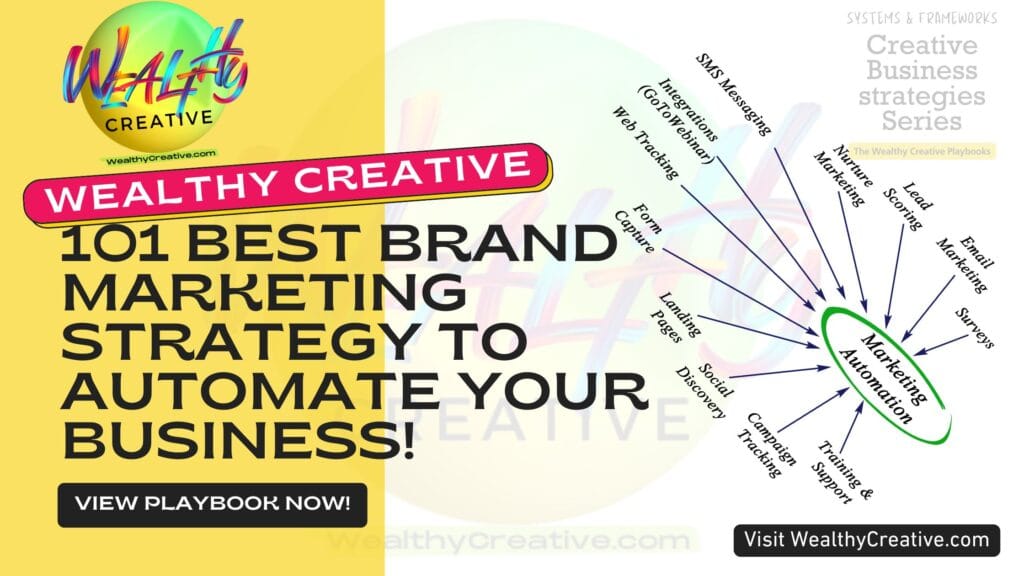
101 Best Brand Marketing Strategy Systems to Automate Your Business!
The Automated Swipe File: How to Capture Advertising Inspiration on Autopilot
101 Best Marketing Ideas for Restaurants to Boost Traffic and Sales in 2026
25 Best Low Cost Advertisement Strategies for Creators & Entrepreneurs in 2026
How Innovative Marketing Systems Build Income Streams on Autopilot in 2026
Why Low Cost Social Media Management Is the Future of Small Business Growth
More Articles and Guides from The Wealthy Creative You May Like:

10 Best Business Degree to Start Business Success!
101 Best Marketing Tips: The Only Playbook You Need to Grow Faster in 2026
BEST Automated Digital Marketing Marketing Strategy for Exhausted Creators!
Transparency Note: This post may contain affiliate links, meaning we earn a small commission if you purchase through them at no extra cost to you. Learn more here: Affiliate Disclosure.